
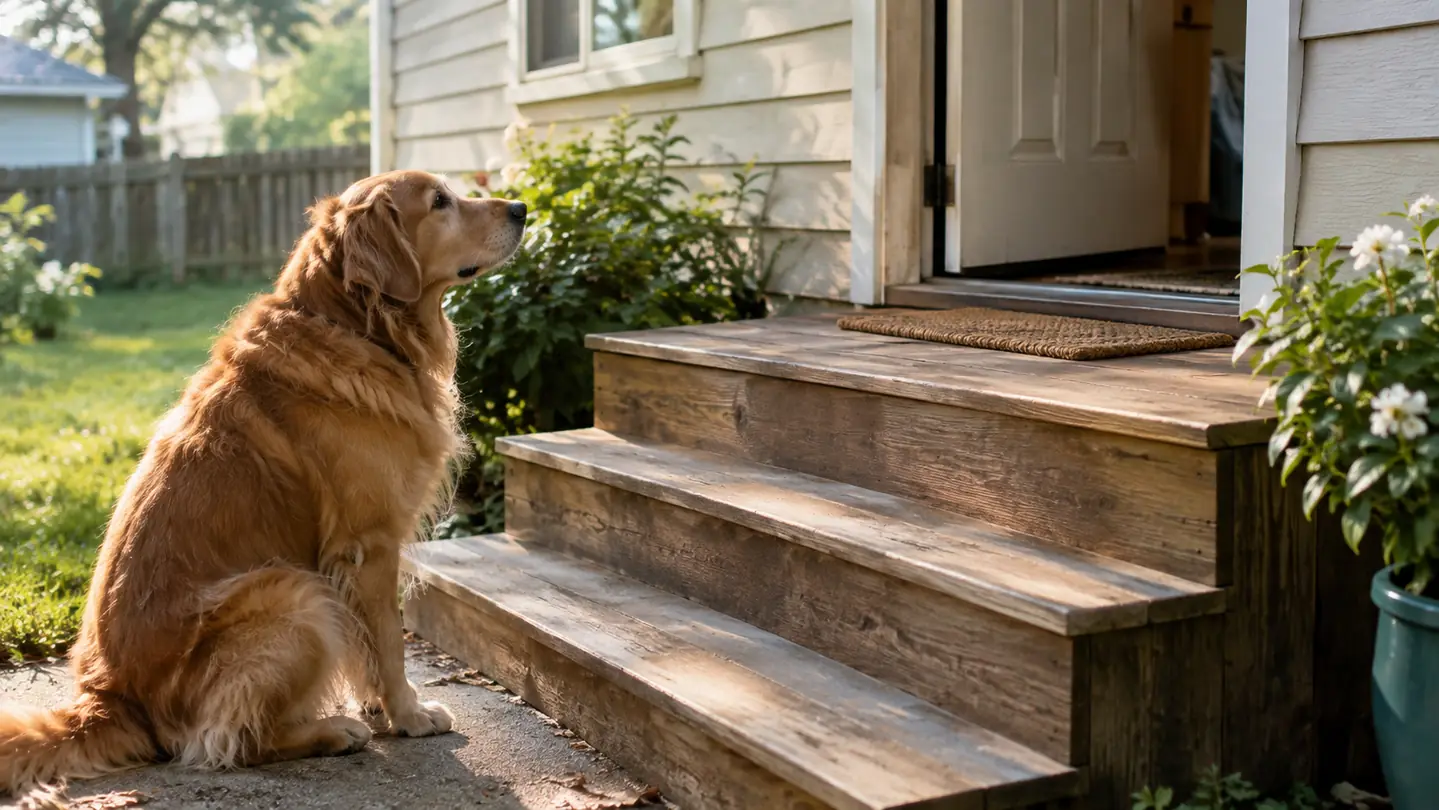
Murphy, my 10 year old yellow Lab mix, has always treated the three back porch steps like they were nothing. He used to launch off the top step, hit the gravel driveway, and keep going. Sometime last spring, that changed. He started pausing at the bottom, looking up, and then taking each step one at a time. Some mornings he would just sit there until I came out and stood beside him. My vet said his hips and knees are showing normal wear for a 72 pound dog his age, and that stairs are harder on older joints than flat ground. That is when I started looking at ramps. After reading a lot of labels and watching a lot of videos, I bought the PetSafe Happy Ride Folding Dog Ramp.
I am not a vet, and I am not going to promise you a fix. What I can tell you is what I tried, what I measured, and what actually made a difference for Murphy. The ramp did not turn him into a puppy again. It did take the hesitation out of his morning routine. If your dog is slowing down on porch steps, here is the process that worked for us, step by step.
I read a lot about ramps before I bought one. Some reviews said the ramp was too steep, others said it was too flimsy, and a few said their dog refused it completely. I almost let those reviews talk me out of trying. In the end I decided that the only way to know was to try it with my own dog, carefully, and to give him time to decide it was safe.
Make the porch steps easier starting today
The PetSafe Happy Ride Folding Dog Ramp is the one I chose for Murphy after measuring our steps and comparing a few options. It folds flat for storage, and it gives a 72 pound dog a gentler way in and out.
Amazon Check Today's Price on Amazon →Why a Ramp Instead of Carrying Him
At 72 pounds, Murphy is too heavy for me to carry up and down the porch safely. I am 57 and in decent shape, but a squirming dog on stairs is how people get hurt. More importantly, carrying him did not solve anything. The next time he needed to go out, he would face the same steps. A ramp gives him a way to move himself, which keeps his muscles working and his confidence up.
I also thought about a dog stair climber or a lift, but for three porch steps that felt like too much equipment. A ramp is simple. It sits on the ground, gives the dog a solid path, and folds flat when I need to move it. For our house, it was the middle ground between doing nothing and turning the porch into a construction site.
Step 1: Measure the rise before you choose a ramp
Before you buy anything, measure the actual height of your steps. Ours are three standard porch steps, about 16 inches total from the ground to the porch floor. The ramp length matters more than the brand. A longer ramp means a gentler slope, and a gentler slope is easier on hips and knees. PetSafe makes this ramp in a couple of lengths, and the one I picked gives us a slope that Murphy can walk instead of climb.
Measure from the ground to the top surface of the porch, not to the top of the step. Then add a little extra for the angle. If the ramp is too short, it becomes steep and the dog ends up scrambling. If it is long enough, the dog can walk down with his head up and his weight evenly spread. That was the first thing that made sense to me, because I had been thinking about the product first and the geometry second.
One more thing: measure the width of the path, not just the height. Our porch is narrow, and I needed a ramp that would not block the whole doorway. The PetSafe folds, so it stores out of the way, but when it is down I wanted it to leave room for a person to step around it. Write the numbers down before you start shopping. It makes the decision a lot easier.
Step 2: Let the dog inspect the ramp before you use it
Murphy is not a fan of new things under his feet. The first time I laid the ramp on the grass, he sniffed it for a full minute and then walked around it. That is normal. I did not try to force him onto it. I left it flat on the ground for a day, then the next day I put a few treats on it. He stepped on it to get the treats, and that was the first small win.
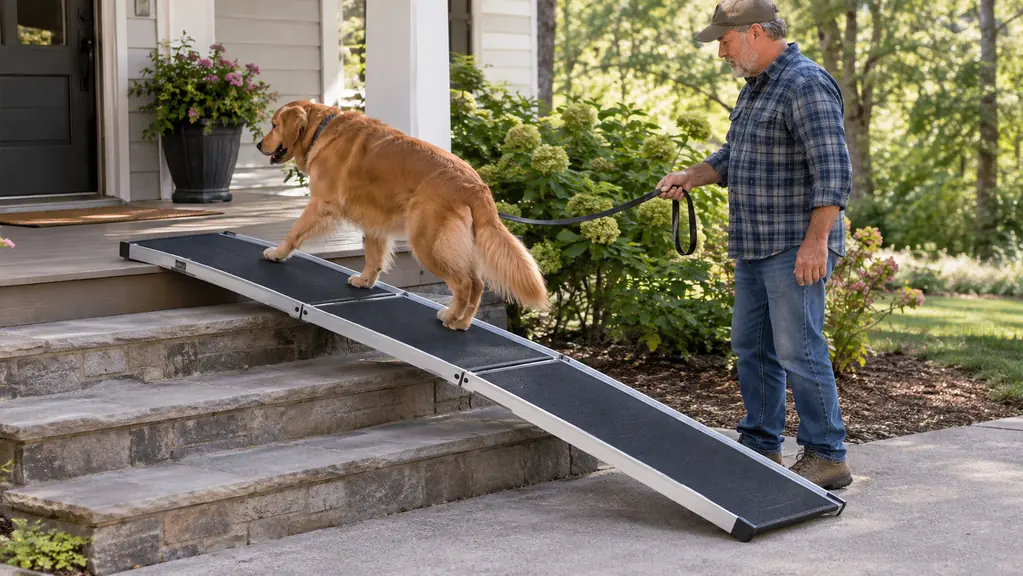
Once he was comfortable walking on it flat, I moved it to the bottom step and let him walk up that one step. It took three short sessions before he would walk all the way up. I kept the leash loose and let him set the pace. The PetSafe ramp has a non-slip surface, which helped because his feet did not slide, but the real lesson was patience. A dog that is already nervous about stairs needs time to trust the new surface.
The treats mattered more than the ramp. I used small pieces of boiled chicken, not big biscuits, because I wanted him to keep his attention on his feet. Every time he put a paw on the ramp, he got a piece. I did not use a clicker or any fancy training. Just calm praise and a treat, over and over, until walking on the ramp felt boring to him.
Step 3: Teach a pause at the top and a slow walk down
Going up was actually easier for Murphy. Going down is where he hesitated. Older dogs often have trouble looking down because it puts weight on the front legs and asks the back legs to brake. I taught him to pause at the top before he started down. I would say 'wait', give him a treat at the top, and then walk down beside him slowly. The ramp is wide enough that he could walk with his body straight instead of sideways.
At first I walked beside him with one hand near his collar, not holding it, just there. If he stopped, we stopped. I never pulled him forward. The goal was to let him learn that the ramp was stable, and that he could stop any time. After about a week, he started walking down on his own while I stayed at the bottom. That was the moment I knew the ramp was doing its job.
I also practiced with him on a flat stretch of the driveway before we ever used the ramp at the porch. That gave us a chance to work on the pause and the slow walk without the height. By the time we moved to the real steps, he already knew what 'wait' meant in this context. The porch was just a new place to do the same thing.
Step 4: Use the ramp every day, even on good days
The biggest mistake I almost made was only bringing the ramp out on days when Murphy seemed stiff. Dogs learn by repetition, and an occasional ramp is just a strange object. I left ours set up at the back door for two weeks straight, even on days when Murphy bounced out like a puppy. That consistency is what turned the ramp from a scary thing into part of the routine.
After those two weeks, Murphy would walk up the ramp without me asking. He still uses the steps sometimes when he is excited, but on ordinary days he chooses the ramp. That choice is the sign that it is working. If you only use a ramp when the dog is already sore, you are asking him to learn something new at the exact moment he feels worst. Give him the ramp when he feels fine, and he will trust it when he does not.
One thing that surprised me was how much easier the ramp became for Murphy after a few rainy days. When the steps were wet, he used to stop at the bottom and refuse to move. With the ramp in place, he would walk right up. The non-slip surface gave him something his feet could trust, and that trust carried over even when the ramp itself was damp.
Step 5: Watch the dog, not the marketing
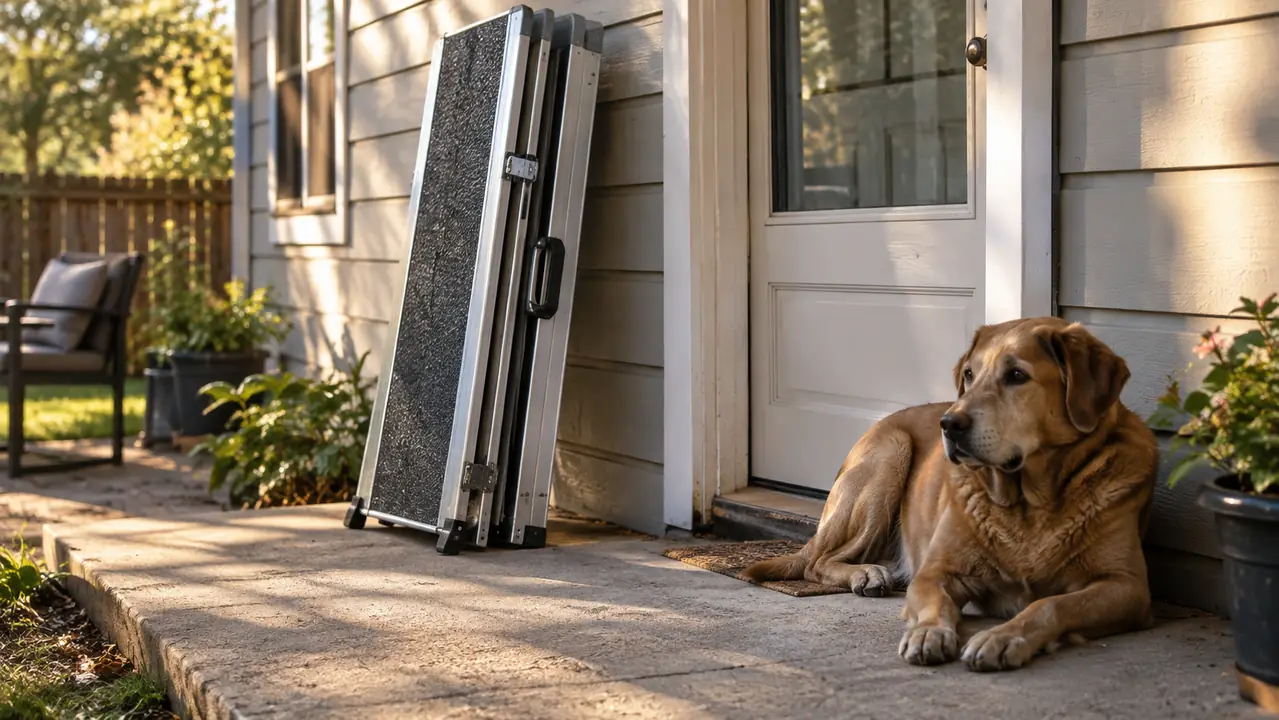
Every ramp claims to be easy and stable. What matters is what your dog does on it. I watched Murphy's foot placement, his pace, and whether he was panting or tense. I also checked the ramp itself. The PetSafe Happy Ride folds flat, which makes it easy to store, but folding ramps have hinges, and hinges need to be checked. I wipe ours down and make sure the feet are still gripping the porch and the gravel.
I also learned to put the ramp at the right angle every time. If it sits too steep, Murphy slides a little. If it is too flat, the bottom end lifts off the ground. I found a sweet spot and marked the ground with a small stone so I can set it the same way each morning. That sounds fussy, but it took five seconds and it made the ramp feel more solid to him.
I keep a small note in my phone with the date and what I see. That sounds like overkill, but it helped me notice small changes. When Murphy started taking the ramp a little faster, I knew his confidence was up. When he hesitated for two mornings in a row, I knew to watch him more closely. The ramp is not a measuring stick for his health, but it is a useful one.
When to Talk to Your Vet
If your dog suddenly refuses stairs, starts limping, or cries when he gets up, do not assume a ramp will fix it. Murphy had a checkup before I bought anything. My vet listened to his heart, watched him walk, and felt his hips and knees. That visit told me we were dealing with normal aging, not an injury. If your dog has a limp that lasts more than a day or two, that is a vet conversation, not a shopping conversation.
The ramp made our daily life easier, but it did not replace veterinary care. I still watch his weight, keep his nails short so he does not slip, and ask the vet about anything that changes. A ramp works with the rest of the plan. It does not stand in for it.
What Else Helps
A ramp addresses the steps, but it does not address the stiffness behind them. Murphy gets up more easily on days when he has had a walk the evening before. I also changed how I feed him, but I will let your vet guide you on food and supplements. I am not a veterinarian, and every dog is different. What I can say is that a ramp plus a gentle walk routine plus a soft bed in the living room made the biggest difference for him.
I keep the ramp near the door, I keep the path clear, and I keep an eye on how he moves. If he ever refuses the ramp or starts limping, that is a reason to call the vet, not a reason to buy a different ramp. The ramp is a tool, not a treatment. It makes the house easier to live in while you figure out the underlying issue.
The ramp did not turn Murphy into a puppy again. It took the hesitation out of his morning, and that was enough.
What I'd Do Differently
If I started over, I would measure the porch before reading reviews, and I would let Murphy sniff the ramp for a day before I ever asked him to walk on it. I would also skip the idea that a ramp has to look perfect. Ours is a working tool that sits by the back door, and the only opinion that matters is Murphy's. He walks up it every morning now, and he comes down it without the long pause he used to have at the top step.
This is not a cure, and I do not think of it as one. It is a practical piece of help for a dog whose joints are getting older, the same way a grab bar in a shower helps a person. If your dog is hesitating on porch steps, talk to your vet, measure the rise, and give a ramp a fair chance with patience and treats. That is what worked for us.
Give your dog a gentler way in and out
Murphy's ramp lives by our back door now. If your dog is slowing down on the steps, the PetSafe Happy Ride Folding Dog Ramp is a solid place to start. Measure your rise, take it slow, and let your dog set the pace.
Amazon Check Today's Price on Amazon →