
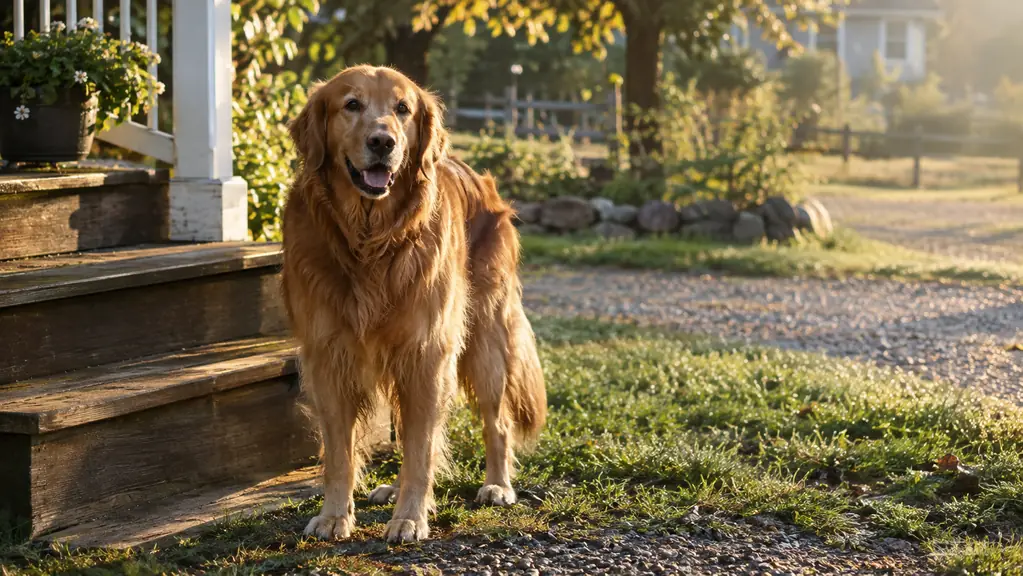
Murphy has three steps to get from the back porch into the house. For nine years, he took them in one bound. Then, somewhere around his tenth birthday, those same three steps turned into a negotiation. He would stand at the bottom, front paws on the first step, and just wait. Not whining. Not hurting, as far as I could tell. Just waiting, like he was doing the math on whether his back legs were going to cooperate.
A friend whose Lab had the same hesitation handed me the LOOBANI Dog Lift Harness and told me to try it before I paid for a vet visit that might just be about age. I am not a vet. I am a retired school office manager who reads labels and watches her dog the way other people watch the news. What I can tell you is what I saw over months of daily use: a harness with handles that let me take some of Murphy's weight whenever his rear legs needed a break.
The Quick Verdict
After months of daily use on my 10-year-old, 72-pound Lab mix, the LOOBANI harness does one thing very well: it gives me a safe, comfortable grip on his rear end so I can take weight off his back legs for stairs, car rides, and stiff mornings. It will not fix the underlying joint problem, and no harness should claim to. It just makes the hard moments easier for both of us.
Amazon Check Today's Price →The harness that got Murphy up the steps, every morning
If your dog has started hesitating at the stairs or getting up stiff after naps, a rear-support lift harness gives you a safe grip exactly when you need it. See today's price and current owner reviews on Amazon.
Amazon Check Today's Price on Amazon →How I've Used It
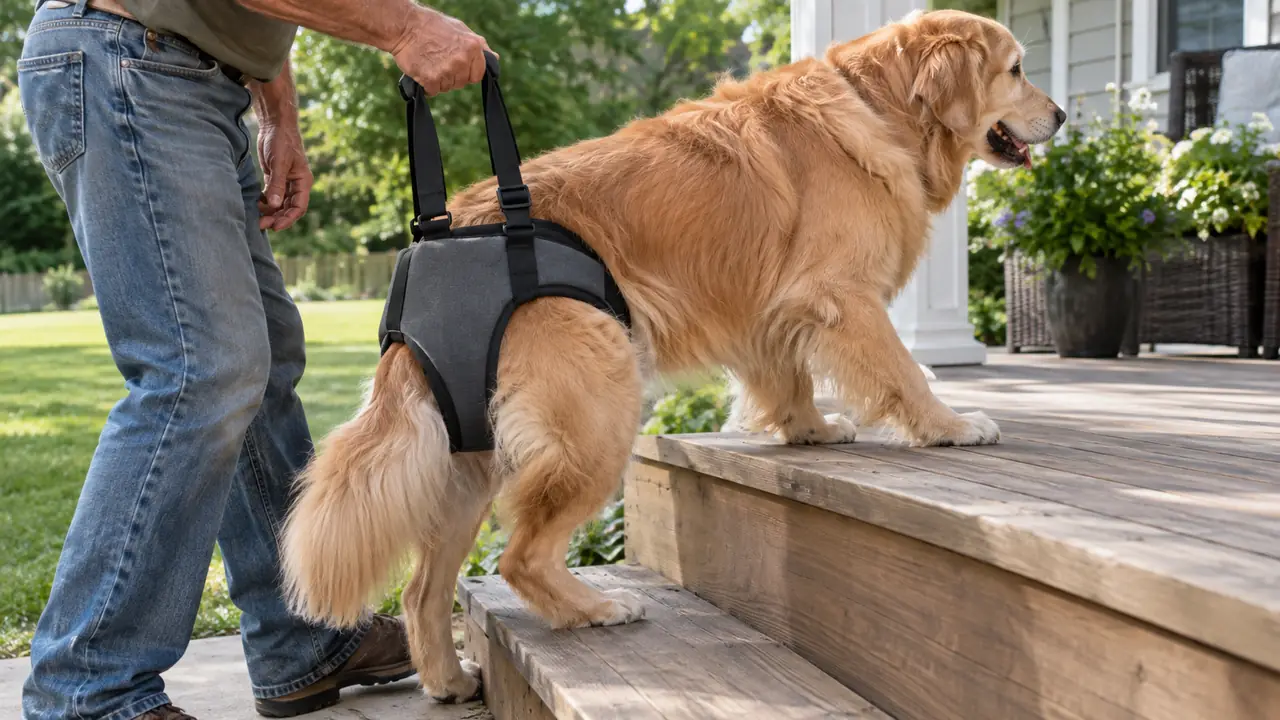
Murphy and I have a routine now. Morning walk, then the three porch steps, then breakfast. The harness lives on a hook by the back door, right next to his leash. I put it on him in the yard before we come in, settle it under his belly, and keep one hand on the rear handle until his back paws clear the top step.
We use it for more than the steps. Getting into the back seat of my SUV used to be a hop. Now he puts his front paws on the seat and waits for me to cup the handle and boost his rear. Same for the vet's table, which the staff noticed right away. And on days when he sleeps hard and wakes up stiff, the harness turns getting up from a struggle into a two-second assist.
I keep a close eye on fit. The straps are adjustable, and I check them weekly because he is not the same shape he was in January. I also wash the harness when it picks up mud from the gravel driveway. It has held up to months of that without the stitching fraying or the buckles slipping.
Our morning walks have not changed much, and I want to keep it that way. The harness is not part of the walk itself. Murphy trots along the gravel driveway and down the street fine once he is warmed up. The help comes at the edges of the day: first thing in the morning, after a long nap, and at the top of the porch steps. Those are the moments the harness earns its place.
What This Harness Actually Does
The whole idea is simple. The LOOBANI harness gives you a way to support your dog's rear end while he does the walking. You grip the handle, lift with your legs, not your back, and take just enough weight off his hind legs to make the steps feel doable. It does not carry the dog. It gives you a safe place to hold on.
The part that surprised me is how much difference the grip location makes. The handle sits over the rear, which is exactly where the help is needed. I have tried grabbing a regular walking harness by the back strap, and it pulls the whole harness out of place. This one lets me lift straight up, and Murphy's front end stays relaxed while I support the back.
I am not going to lecture you about materials I cannot see. What I can tell you from months of use is that the strap under Murphy's belly has never left a rub mark, the handle has never slipped in my hand, and the buckles have never come undone on their own. That is the standard I care about at 6:15 in the morning.
I also like that the handle sits where I can reach it without bending over double. At 57, my back is not what it was. The first time I used a different style of support, I had to hunch awkwardly. With this one, I stand mostly upright and let my legs do the work.
How It Held Up Over Months of Use
I have been using this harness daily since late spring. That is somewhere around 180 days of putting it on and taking it off, sometimes twice a day when Murphy needs help on the way out and the way back in. The buckles still click cleanly. The straps still hold their adjustment. The whole thing has been through the washer a few times and still looks the way it did the day it arrived.
The one thing I watch is the stitching around the handle where most of the force lands. After about four months, I found a loose thread and took it seriously, because a handle that gives out mid-lift is the one failure you cannot afford. So far it has been just that one thread. I check it every week now, and I would tell anyone using any lift harness to do the same.
I should be clear about what the harness did not do. It did not make Murphy's legs stronger. It did not fix whatever is going on with his hips. We are working with our vet on that part, and I do not use the harness as a substitute for veterinary care. What it did was remove the worry from the daily moments where he needed help. That alone was worth it.
The morning Murphy cleared the top step without waiting for me to count to three, I knew the harness was earning its place by the door. That had not happened in weeks.
The Tradeoffs I Noticed
No piece of gear is perfect, and this one has a learning curve. The first time you put it on a wiggly dog, you will feel like you need three hands. I found it easiest to lay the harness flat on the ground, have Murphy step into it, and then adjust the straps from underneath. After a week, I could do it in under a minute.
It is also a piece of equipment you have to remember to bring. The harness does no good hanging on the hook by the door if you are at the vet's office or at a relative's house and your dog suddenly needs help. I keep a spare in the car now, which is my own solution and not something the product promises.
And it is visible. This is not a subtle piece of gear. People will ask what it is, especially other owners of older dogs. I have had three separate neighbors ask about it on the sidewalk, and I sent one of them the link so she could order one for her own dog. To me that is a feature, not a flaw.
One more note on fit. This harness is built for large dogs, and getting the fit right matters more than I expected. I measured Murphy around the chest and belly before ordering, rather than guessing from his weight alone. A harness that is too loose will slide sideways when you lift, and one that is too tight will rub. Take the measurements, then check the fit again after a few weeks.
Alternatives I Considered
Before I settled on this harness, I looked at a couple of other options. There are sling-style supports that look like a wide fabric band you slide under the belly, and I can see how they would work for a dog who only needs help for a few seconds at a time. But for daily use, I wanted a real grip over the rear and a fit I could adjust as Murphy's weight shifts.
I also considered a full-body harness with a handle at the back. The difference is where the handle sits. For hind leg support specifically, I wanted the grip positioned over the rear, not the middle of the back. The LOOBANI design puts the support where Murphy actually needs it.
The honest part: I have not tried every harness on the market, and I am not going to pretend I have. What I can tell you is that this one solved the specific problem I bought it for, and it is still doing that months later.
I will be the first to admit I read reviews for a full evening before I ordered. What settled it for me was the number of reviews from owners of older, larger dogs describing the exact same hesitation I was seeing in Murphy. That kind of specific detail is hard to fake. I would rather buy something well reviewed than gamble on a cheaper option that might not hold up.
What Surprised Me Most
The biggest surprise was how quickly Murphy stopped bracing against the harness. The first week, he would plant his feet when I reached for the handle, like he was not sure what I was about to do. By the second week, he started leaning into it. I do not think he knows it is called a harness. I think he knows the handle means the porch steps are not scary anymore.
The other surprise was how much it helped me. I was worried about hurting myself trying to help him. At 57, I have no business hefting 72 pounds of dog by the ribs. The harness changed the physics of it. I bend my knees, grip the handle, and let my legs lift while Murphy walks. My back has not complained once.
And the third surprise was the vet's reaction. At Murphy's checkup, the vet asked about the harness and then nodded when I described how I use it. She told me the goal is to keep him moving without letting him overdo it, and that a rear support harness can be part of that as long as we keep monitoring his hips. That was the reassurance I needed.
What I Liked
- Rear handle gives a secure grip for lifting the hind end
- Adjustable straps let the fit change as your dog's weight changes
- Held up to daily use and washing for months without failing
- You can use it standing mostly upright, which is kind to your own back
- Handle sits over the rear, right where hind leg support is needed
Where It Falls Short
- Takes a few tries to learn how to put it on smoothly
- You have to remember to bring it, which is why I keep a spare in the car
- It supports your dog but does not treat the underlying joint problem
Who This Is For
If your dog is still mobile but hesitates at stairs, gets up slowly after naps, or needs a little help into the car, a rear-support lift harness like this one is for you. It is for owners who want to keep their dog independent for as long as possible while quietly lending a hand when it is needed. And it is for anyone whose own back cannot take the strain of lifting a 70-pound dog by the belly.
It is also for the person who feels guilty. I did. Every time Murphy waited at the bottom of the steps, I wondered if I should have noticed sooner, walked him more, done something differently. The harness did not erase that guilt, but it gave me something better than guilt: a way to help him right now. That matters more than I can say.
Who Should Skip It
If your dog cannot bear weight on the hind legs at all, or if the weakness came on suddenly, do not start with a harness. Talk to your vet first. Sudden hind leg weakness can be a sign of something serious, and a harness is not a treatment. This is also not the tool for a dog who needs a sling-style lift for short carries. And if your dog has a skin condition or a recent surgical site where the straps would rub, ask your vet before using any harness.
Six months ago, I was dreading the day Murphy could not make it up the porch steps at all. That day has not come. He still needs help sometimes, and on those days I reach for the harness on the hook by the door, the same way I reach for his leash. It is not a cure. It is a hand up, and for a dog who has given me ten good years, that feels like the least I can do.
Give your dog a hand without hurting your back
If you are seeing the same hesitation I saw on my own porch steps, a rear-support harness is worth trying. Check today's price and current owner reviews on Amazon.
Amazon Check Today's Price on Amazon →