
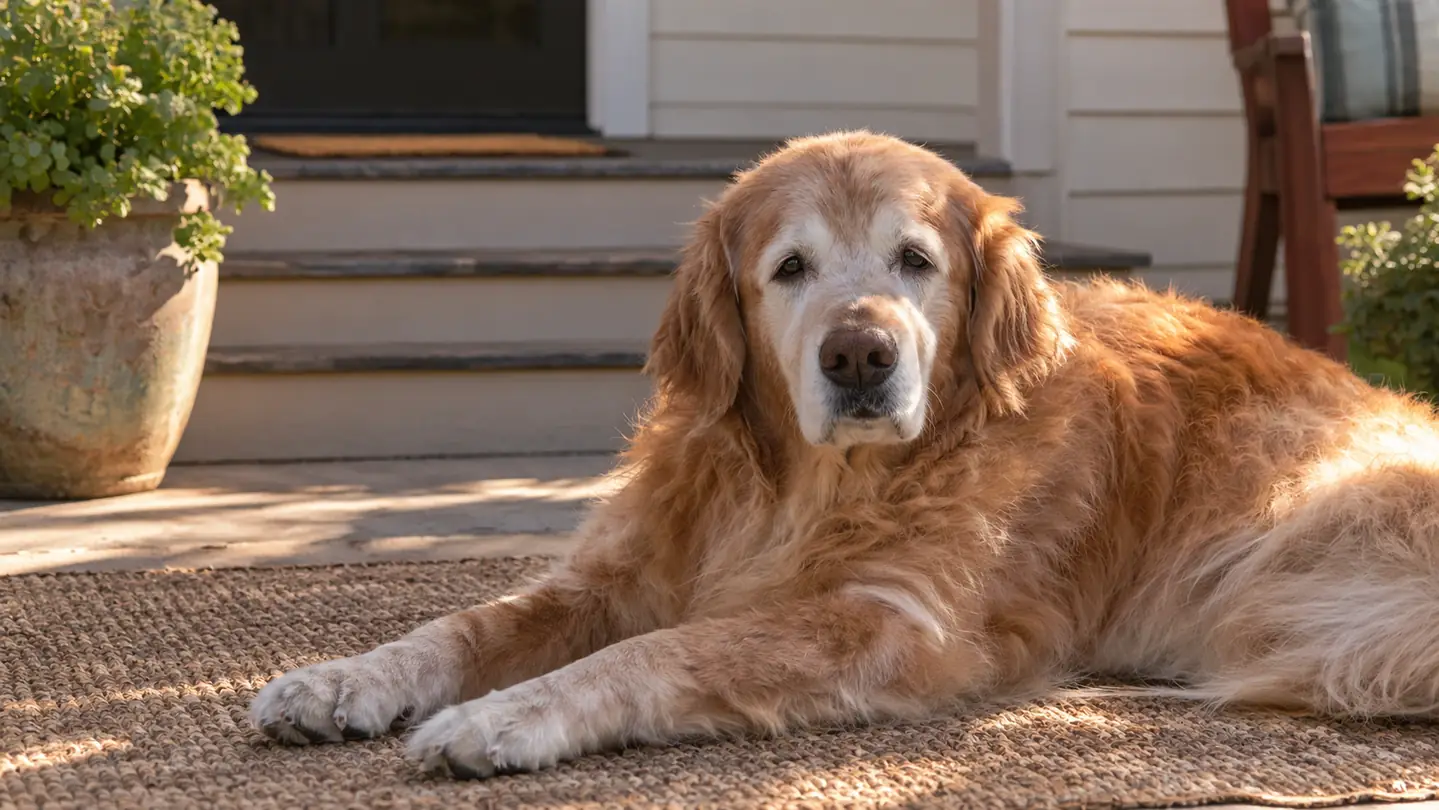
Murphy used to take those three back porch steps in one motion. Around the time he turned 10, he started pausing at the bottom of them. Then he started getting up slowly after his naps, and some mornings he would just stand by the kitchen door for a minute before stepping outside. I am not a vet, and I want to be clear about that from the start. I am a 57-year-old retired school office manager who watched her 72-pound yellow Lab mix get stiff and decided to do something about it. This is the plan that worked for us, step by step, including the Cosequin soft chews from Nutramax Laboratories that made the most visible difference.
Before I get to the steps, the one thing I would say to anyone reading this is: start with your vet. I did. Murphy had bloodwork and a physical exam, and my vet confirmed that his joints were the issue rather than something else. She gave me a target weight range, talked to me about pain medication if he ever needed it, and told me that a joint supplement was worth trying while we worked on the rest of his care. Cosequin came up in that conversation by name. That is the context for everything below. These are the five steps we used, in the order we used them.
The chew that made the first real difference for Murphy
Nutramax Laboratories Cosequin soft chews are the supplement my vet and I agreed Murphy should try first. They went into his bowl the same night we started the rest of the plan.
Amazon Check Today's Price on Amazon →Step 1: Ask your vet what is actually going on
Stiffness in a senior dog can come from a lot of places. Arthritis, hip dysplasia, old injuries, even weight putting extra load on the joints. I did not want to guess, because guessing wrong meant wasting weeks or making something worse. The vet visit cost us a routine exam fee, and it gave me a clear answer: Murphy has mild joint changes consistent with his age, and he is about six pounds over the top of his ideal range. That last part mattered. Extra weight is extra load on already tired joints, and no supplement in the world fixes that.
Your vet may also want to check for things that look like joint stiffness but are not, such as a torn ligament or a neurological issue. That is exactly why I am not going to tell you to skip this step. Ask what dose of a supplement they recommend, whether they want you to use a specific brand, and how long to try it before deciding whether it is working. For Murphy, the instruction was simple: pick a reputable product with real clinical backing, use it daily, and give it about six weeks before judging the results.
One more thing from that visit that I want to pass along: my vet wrote down Murphy's current weight and his target weight on the same piece of paper. That number became our goal for the next several months. If you leave the clinic without a number, call and ask for one. It is hard to manage what you are not measuring.
Step 2: Pick a supplement with evidence behind it
Once my vet gave the go-ahead, I had to choose between about fifty different bottles at the store. I am a label reader by nature, so I stood in the aisle and read a lot of them. What I learned is that many joint supplements for dogs are long on marketing and short on ingredients you can verify. I wanted something with a well-known active ingredient, a brand that has been doing this for a long time, and a form I could actually get Murphy to eat.
The active ingredient I kept coming back to was glucosamine, often paired with chondroitin. Cosequin from Nutramax Laboratories contains both, along with MSM, and the brand has been used by veterinarians for decades. That mattered to me. I am not easily impressed by a fancy label, but I do pay attention when a product is the one my vet mentions by name and the one with a long history of use in veterinary medicine. Nutramax Laboratories also makes Cosequin in a few different forms, which meant I could choose the soft chew instead of trying to hide a pill.
If your dog refuses one form, do not give up. Some dogs will eat a soft chew like it is a treat, and others will not. The same brand makes tablets, and there are also sprinkle capsules for dogs that inspect their food too closely. What matters is that you find a delivery method you can use every single day, because consistency is the part that actually works.
Step 3: Start with the right dose and give it time
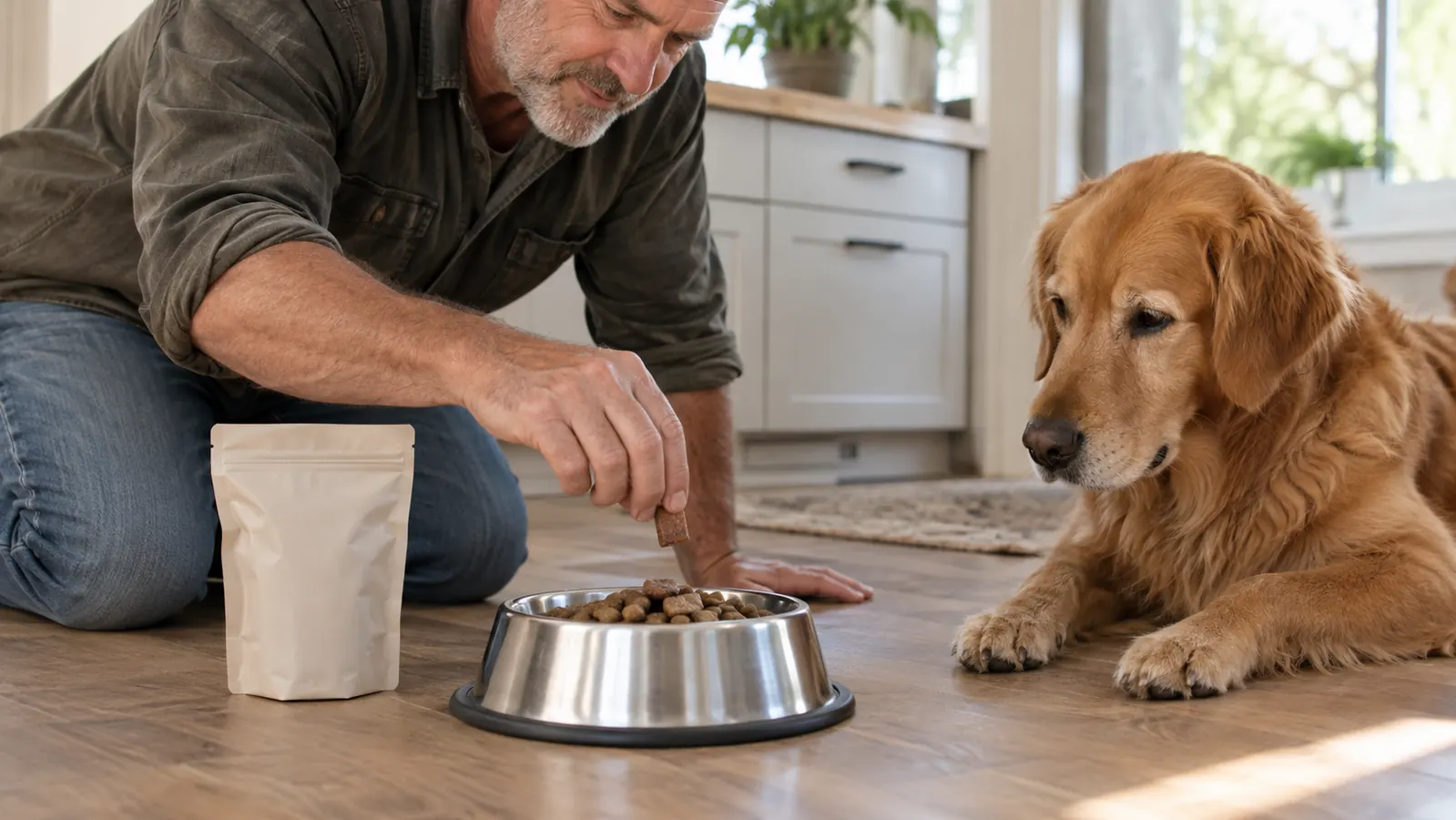
Here is where I almost made my first mistake. My instinct was to guess. Instead I read the label on the Cosequin soft chew container and saw that the serving size depends on the dog's weight. Murphy is 72 pounds, so I checked the label for his weight range before giving him anything, and it came out to one chew a day. My vet agreed, and told me not to double up on a bad day, because more is not better with supplements.
We stuck to one chew a day, every day, and did not get creative with it. I set a daily alarm on my phone so I would not forget, and I gave the chew at the same time every morning with breakfast. Murphy started waiting by the cabinet at 7 am within about four days, which tells you how palatable these soft chews are. A supplement only works if the dog actually eats it, and this one went down like a treat every single time.
The other part of this step is patience. I did not see a dramatic change overnight, and I did not expect one. My vet had told me to give it about six weeks, and she was right. Around the three-week mark, I noticed Murphy getting up from his bed with less hesitation. By six weeks, the difference was consistent enough that my sister commented on it without me saying anything. He was still an older dog. He was still slower than he was at seven. But he was moving like a dog who was comfortable in his body again.
Step 4: Help the supplement by helping the rest of his day
A supplement is not a substitute for the rest of the plan. I want to be blunt about that, because it is the part of the advice that is easiest to ignore. The Cosequin soft chews from Nutramax Laboratories did their job, but Murphy also got better because of everything else we changed around them.
First, we worked on his weight. The six pounds my vet wanted him to lose came off over about four months, mostly by measuring his food with an actual measuring cup and cutting back on the extra treats. I also switched his longer walks from the afternoon to the morning, when the temperature was cooler and his joints seemed more willing. We kept the walks shorter but steadier, and I let him set the pace. Some days that meant a full loop around the block. Some days it meant a slow stroll to the mailbox and back. Both counted.
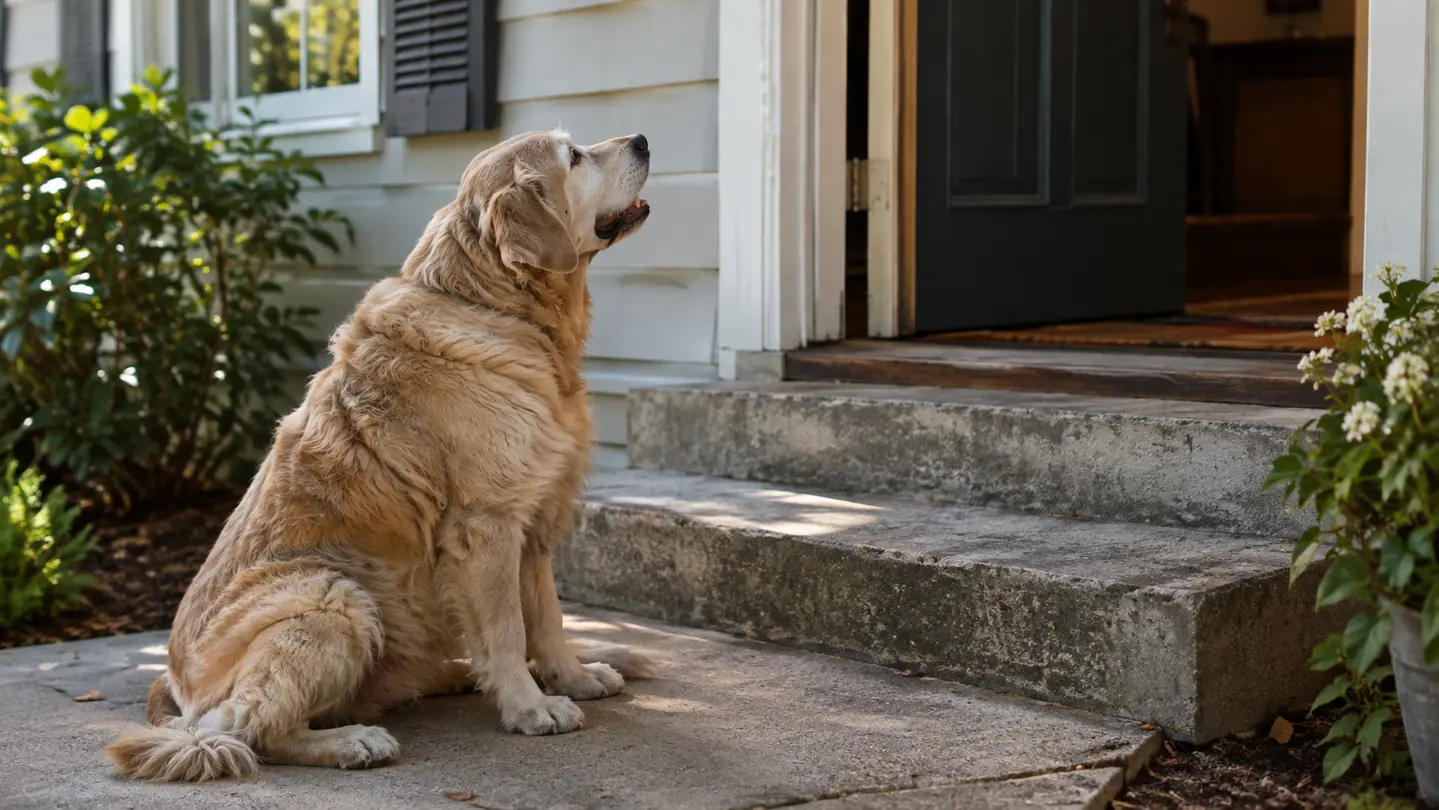
At home, I made two small changes that helped more than I expected. I put a nonslip rug at the bottom of the back porch steps, because I had watched him slip once on the dew-covered concrete and it scared me. I also bought a cheap raised bed so he did not have to fold himself down onto the hard floor. Dogs spend a lot of their day lying down. Making that surface softer and easier to get up from is not pampering. It is practical.
Step 5: Watch for progress, and know when to call the vet
I kept a simple note in my phone for the first couple of months. Just a date and a one-line observation. "Murphy took the steps without pausing." "Murphy slow to get up after a long nap." "Murphy trotted to the fence when the mail truck came." That little log did two things. It stopped me from imagining progress that was not there, and it stopped me from missing progress that was. On the hard days, I could scroll back and see that he really was better than he had been in January.
I also learned to watch for the signs that mean it is time to call the vet, not just adjust the plan. If Murphy had started refusing to eat, crying out when he moved, or suddenly unable to put weight on a leg, I would have been on the phone the same day. Joint supplements support comfort. They are not pain medication, and they are not a reason to skip a vet visit when a dog is truly hurting. My vet also told me to call if the stiffness ever seemed to get worse for more than a few days in a row.
At his six-month checkup, the vet was pleased with his weight and his movement. She said what I had been hoping to hear: keep doing what we are doing. That felt better than any number on a scale. The plan was working, and it was working because we did all of it together. The chews, the walks, the weight loss, the rugs, and the phone calls when something did not look right.
What Else Helps
Beyond the steps above, a few other things made a real difference for us. Warmth helped Murphy noticeably, so I made sure his bed was away from cold drafts and I kept the house a little warmer in the winter. Gentle massage along his back legs after a walk seemed to relax him, and I always let him set the pace for how long we did it. Swimming is a fantastic option if your dog enjoys it and you have a safe place for it, because the water supports the joints while the movement keeps the muscles strong. I also learned that short, frequent walks beat one long walk for a stiff senior dog. Ten minutes in the morning, ten at night, and a slow wander in the yard at midday kept him moving without wearing him out.
By six weeks, my sister commented on the difference without me saying a word. He was still an older dog. He was moving like one who was comfortable in his body again.
Murphy's routine started with a single soft chew a day
The Cosequin soft chews from Nutramax Laboratories were the piece of the plan that made everything else easier to stick with. They are easy to give, they have decades of veterinary use behind them, and they are the same product my vet named without hesitation.
Amazon Check Today's Price on Amazon →